Browser-based image help

How to approach ai unblur image online free

If you searched for ai unblur image online free, start by checking what kind of blur affects your photo. A browser-based workflow may improve visible edges, but it cannot guarantee recovery of detail the camera never captured.

Continue on SupaVisual

Sign in to SupaVisual to upload an image and use prompt-based image editing or 2×/4× upscaling. Generation requires a paid plan. There is no dedicated deblur, sharpen or denoise tool and no guaranteed recovery of missing detail.

Open SupaVisual image editor

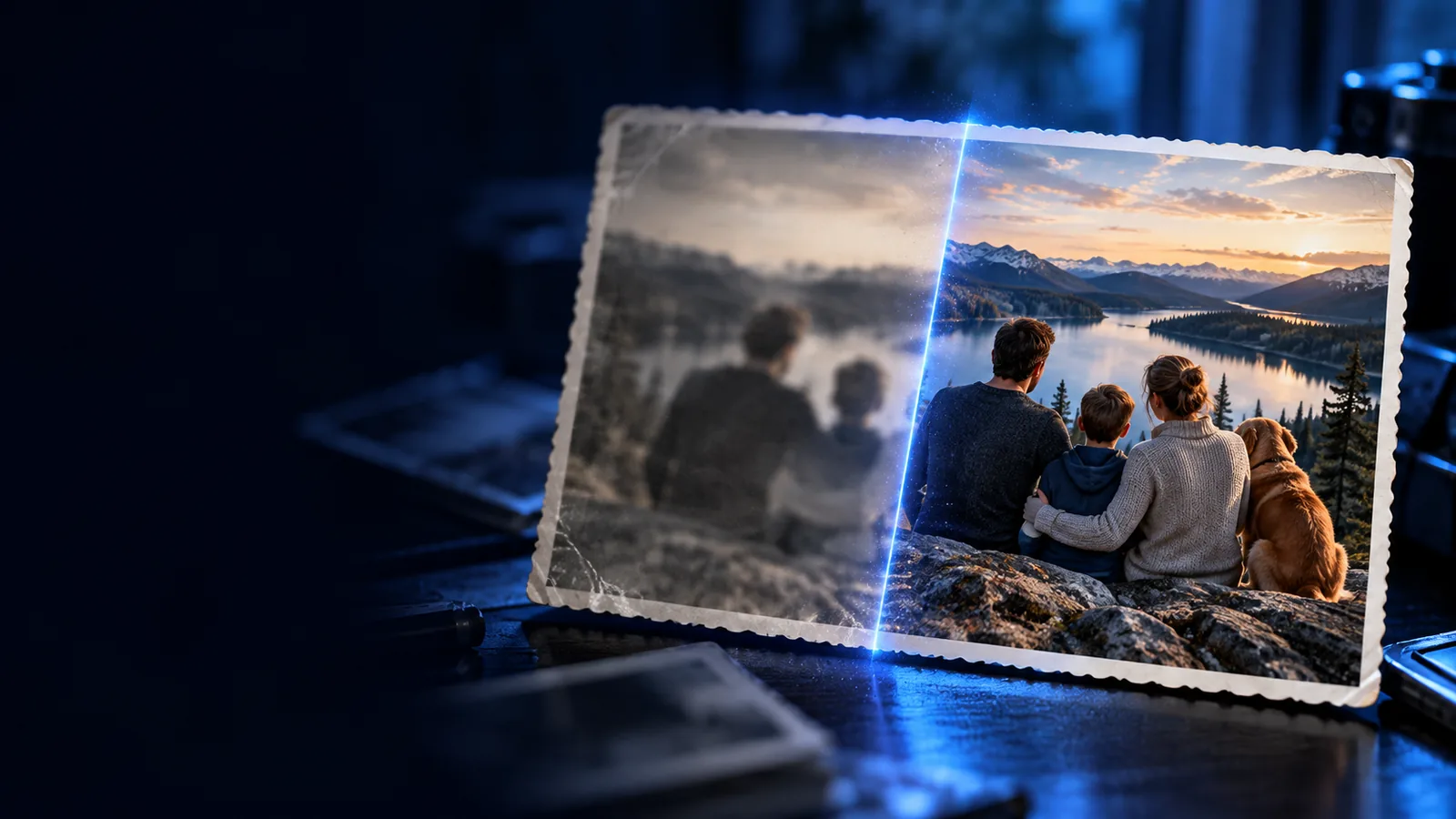
Illustrative concept: compare a soft photo with a clearer-looking version. This is not a product output; upload and describe your own edit on SupaVisual.

Unblurimage landing-page image showing a photo-clarity example

Three ways to decide what your photo needs

A useful online workflow starts with diagnosis, not maximum sharpening. These common situations call for different expectations.

The family-photo keeper

A face looks a little soft, but the eyes, hair, and background still show recognizable edges.

Try a restrained clarity pass and compare skin texture against the original. For a practical sequence, follow the browser-based editing walkthrough.

How do I unblur an image that has been blurred?

The product-photo editor

A small image appears fuzzy after resizing, while its larger original is still available.

Return to the larger source first. Enhancement has more useful information to work with when the input has not already been reduced.

blur to clear image converter

The cautious archivist

An old scan contains soft lettering and an important detail must remain faithful to the source.

Treat apparent new strokes as uncertain. Before relying on an enhanced version, check what image restoration can actually recover.

Can you really unblur an image?

Work through the photo in your browser

Keep the original nearby so you can judge an edit against evidence rather than against memory.

Inspect the original

Open the highest-quality copy you have and zoom in on one important area. Note whether you see slight softness, directional camera shake, or broad out-of-focus blur.

Try a modest improvement

Visit the linked web tool, inspect its available image options, and describe the result you want. If it accepts your image, start with a natural-looking clarity request rather than asking it to invent missing detail.

Compare before sharing

Check the same crop in both versions. Look for improved edge definition, but also inspect faces, text, and fine patterns for invented shapes, bright outlines, or a waxy finish.

Browser assistance versus manual sharpening

Neither approach reconstructs a guaranteed original. Choose based on how much control and visual interpretation the image requires.

AI-assisted web workflow Manual sharpening
1

Starting point

AI-assisted web workflow

Describe the desired visual improvement and review the available tool options.

Manual sharpening

Adjust sharpening controls in an image editor.

2

User control

AI-assisted web workflow

Depends on the controls offered by the linked service.

Manual sharpening

You directly choose adjustment strength and, where supported, the affected area.

3

Mild softness

AI-assisted web workflow

May improve apparent clarity; compare against the source.

Manual sharpening

Often a suitable first test when edges are already visible.

4

Severe defocus

AI-assisted web workflow

May produce plausible-looking detail that is not verified.

Manual sharpening

Cannot restore detail absent from the source.

5

Small text

AI-assisted web workflow

New-looking letter shapes need verification against another source.

Manual sharpening

Sharpening can increase contrast but cannot establish unreadable words.

6

Private images

AI-assisted web workflow

Read the service's current handling terms before submitting a sensitive file.

Manual sharpening

A local editor can keep the file on your device, depending on its setup.

Look for clarity without changing the subject

Softer example

Illustrative photo of a blue car with softened edges
Illustrative photo of a blue car with clearer visible edges
Clearer example

These images illustrate a visual comparison; they are not a verified before-and-after result from the linked tool. Judge your own photo at the same zoom level in both versions.

Know the limits before you upload

An online image tool can change how a photo looks. It cannot prove that newly visible-looking details match the real scene.

Lost detail stays uncertain

Strong defocus or motion blur can erase distinctions between edges. An enhanced face, sign, or number may look convincing without being accurate.

WorkaroundFind another frame, an original file, or a sharper reference when accuracy matters.

Oversharpening creates artifacts

Bright halos, grain, and brittle textures can make an edit look sharper while making the photo less natural.

WorkaroundCompare important areas at full size and prefer a subtler result.

Web access does not define terms

A browser page does not establish which features are available without payment, what file types it accepts, or how uploaded photos are handled.

WorkaroundCheck the destination's current options and privacy terms before submitting a personal image.

Ready to test a careful improvement?

Start with your best original photo

Open the linked tool, review its available options, and aim for an improvement you can verify against the source. Keep the original unchanged so you can compare fine details afterward.

  • Begin with the highest-quality copy available
  • Check sensitive areas before sharing the result

Questions about online image unblurring

You can visit the linked service in a browser and inspect the image options it currently provides. Available controls and supported inputs depend on that service, so check them before preparing a photo.

Opening a web page does not itself require installing a dedicated app. Your browser and device still need to meet the destination's requirements, which are best checked on the page itself.

No. A search phrase does not establish a service's current access terms or the features included at any access level. Review the linked service's terms before submitting a file or relying on a particular option.

Not reliably if the letters are unreadable in the source. Processing may make shapes look more legible without confirming the original words; use another photo or document to verify important text.

Check the destination's current privacy and file-handling information first. If you cannot accept submitting the image to that service, consider an appropriate local editing workflow instead.

Open SupaVisual image editor